Your digital product strategy in a free zone starts when you begin from a real problem for a specific market, not from a technical idea. The free zone advantage — fast setup, full ownership, and global access — makes building easy, but it does not replace validating demand. A successful product is tested before it is built, and scales on evidence, not enthusiasm.
In this guide: what makes building from a free zone different, how to start from the problem, how to validate demand, how to choose your market, common mistakes, and how to measure success.
What makes building a digital product from a UAE free zone different?
A free zone gives you full ownership, fast setup, and a globally oriented structure. These are operational advantages, not a product strategy.
The risk is that speed becomes haste: you build a full product because setup was easy, before confirming anyone wants it.
The real advantage is using fast setup for early testing, not early building.
Many free zones specialise by sector (tech, finance, media). Choosing a zone puts you near your sector's customers and partners — use that proximity to understand the problem first.
How do you start the product strategy — from the problem, not the idea?
An idea is not a strategy. Strategy starts with a clear problem for a specific person. Ask before any line of code:
- Who exactly is the user, and what problem hurts them today?
- How do they solve it now, and what is missing in their current fix?
- Are they willing to pay money or time for a better solution?
- What single outcome changes if they use your product?
If your answers are not specific, you are building on a guess. Good strategy turns a guess into a testable hypothesis.
How do you validate demand before you build?
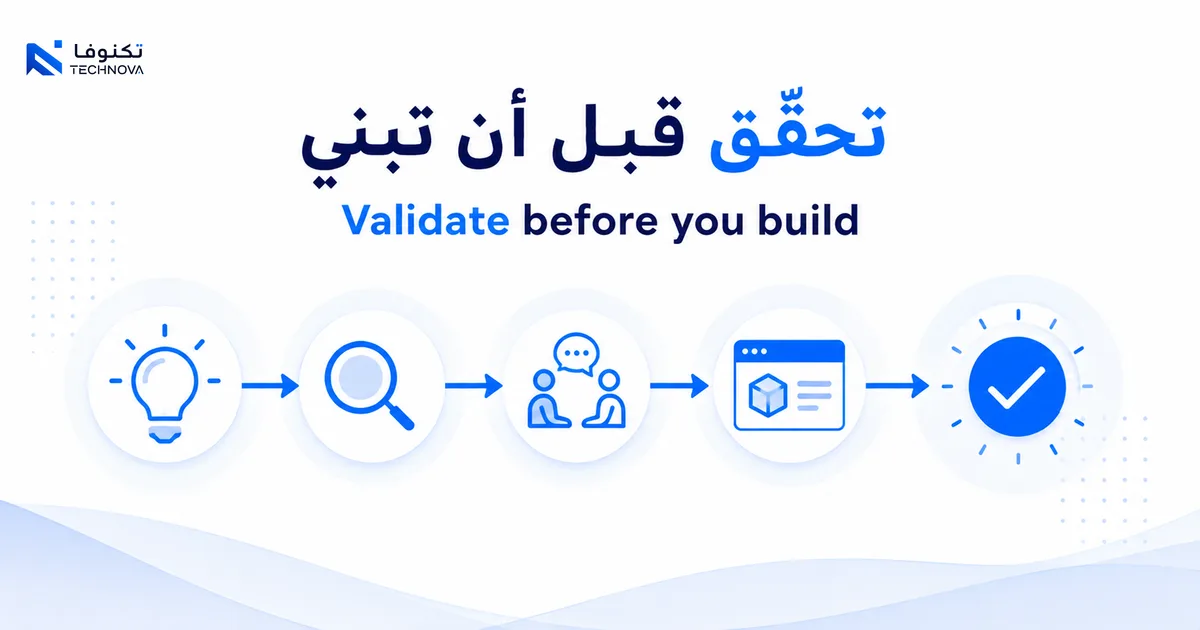
Validation is proving the problem is real and the solution is wanted — before spending a budget on full build.
- Interview ten target customers and hear their problem in their words.
- Show an early solution (a page, a mockup) and measure the real reaction.
- Build an MVP (Minimum Viable Product) — the smallest version that solves the core problem and proves value.
- Watch actual behaviour (sign-ups, usage, payment), not polite opinions.
The goal is reaching Product-Market Fit: evidence that people want your product and come back to it.
How do you choose your market: local, regional, or global?
The free zone opens global markets to you, but starting global from day one is a common mistake.
- Start with one market you understand well — usually the UAE or the Gulf.
- Prove fit there first, then use the evidence of success to expand.
- Account for local differences: Arabic language, payment methods, and buying behaviour.
- Do not just localise a global product — build for the local market with real value.
Global expansion is the result of proven local success, not a starting point.
What mistakes make free zone products fail?
- Full build before validating demand.
- Targeting the whole world instead of one clear market.
- Copying a product that succeeded elsewhere without understanding local differences.
- Focusing on setup and licences more than on the customer.
- Launching without success metrics agreed in advance.
Each of these turns the speed advantage into wasted cost.
How do you measure the success of the product strategy?
Before launch, define KPIs (Key Performance Indicators) tied to the problem you solve.
- Does the user come back after the first use? (retention)
- How long does it take the user to reach first value?
- Does usage grow by referral or only by spend?
- What share of those who tried became actual users?
A good indicator tells you whether you are approaching fit or drifting from it.
How do you balance launch speed with the patience to validate?
The free zone's speed is double-edged: it helps you launch fast, and it tempts you to build fast too early.
The rule is to be fast at learning, patient at building. Invest the speed in testing many hypotheses cheaply, then commit to full build only after the market proves it wants the solution.
A founder who builds slowly after validating quickly goes further than one who builds fast without validation. Patience here is not delay — it protects your capital and time from building something no one needs.
How do you choose the right free zone for your product?
Not every free zone suits every product. The wrong choice costs you licences you do not need, or distances you from your customers and partners.
The UAE has many free zones, and some specialise by sector. Proximity to your sector matters more than a shiny name.
- Sector: is the zone close to your field's customers and partners?
- Activity scope: does the licence actually allow your digital activity?
- Cost: setup and annual renewal fees against what it offers.
- Ecosystem: are there companies and talent around you that serve your product?
Choose the zone that brings you closer to the market you will sell to, not the one that merely looks most prestigious. Proximity to the customer is a strategic decision, not an administrative detail.
Do not rush setup before you know your customer. Choosing a zone is easy to change later, but building a product no one wants is a costly mistake that is hard to undo.
Remember the free zone is a launch tool, not a goal. Companies that succeed spend their energy on the customer and the product, not on endless comparison between zones.
How do you fund your product during the validation stage?
The common mistake is to seek large funding before you hold any evidence of demand. Funding follows evidence, not the other way around.
In the validation stage, your goal is not to build a large product, but to prove the problem is real at the lowest possible spend. This often makes self-funding enough at the start.
Begin with the smallest experiment that proves demand: a page, a mockup, or a simple MVP. The evidence you gather here raises your company's value when you later speak to an investor.
A serious investor funds proven growth, not the idea alone. Every piece of demand evidence you gather before funding strengthens your position and reduces the share you give up.
Also keep your expenses low at this stage. Every month you gain on a limited budget gives you more chances to learn before the money runs out, and early financial discipline usually serves you for a long time.
When do you build an in-house team and when do you use a tech partner?
You do not need a full team to start. In the validation stage, speed and flexibility matter more than building a permanent structure.
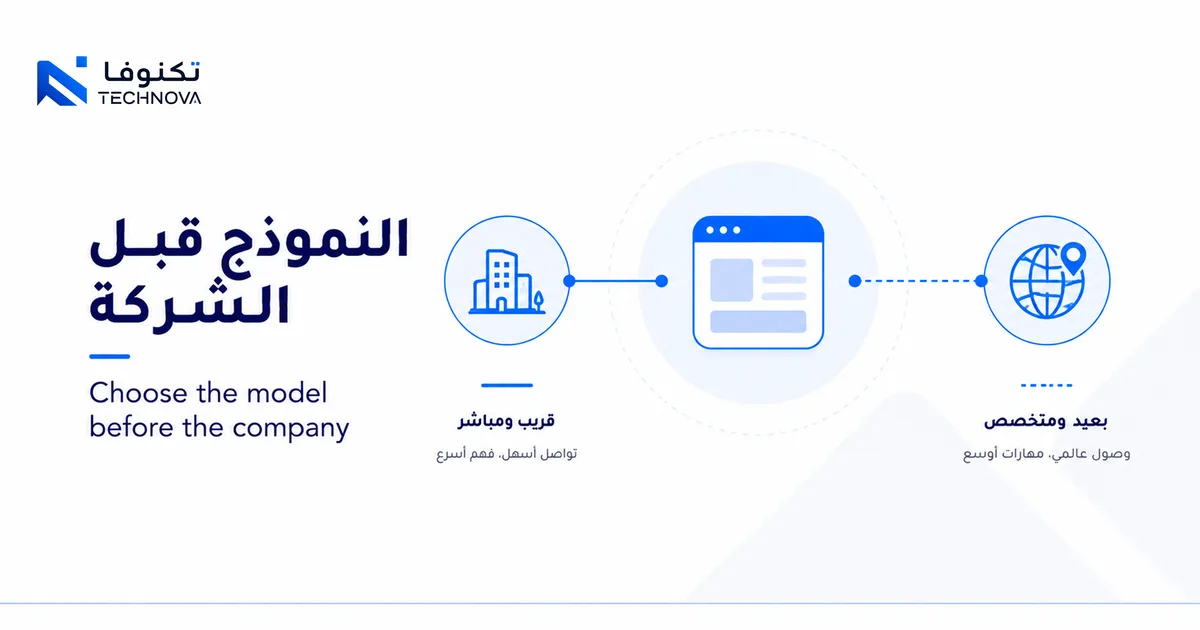
Use a tech partner when you want to test your idea quickly without a long hiring commitment, or when you lack a specific technical skill for a specific stage.
Build your in-house team when the product proves its demand and becomes the core of your business, so you need knowledge that stays inside the company and evolves with it.
- Early stage: a tech partner is faster and lower risk.
- After proving demand: build an in-house core team for the essentials.
- Keep what differentiates you in-house, and outsource what is temporary or specialised.
The decision is not always "hire or not," but "what must stay inside my company, and what can I deliver faster with a partner?"
Where do you practically start?
- Write the problem you solve in one sentence, and for whom.
- Interview ten potential customers before building anything.
- Turn what you learned into one testable hypothesis.
- Start with Discovery, then an MVP for the smallest possible solution.
- Define one indicator that tells you you are on the right track.
An illustrative example: a founder in a free zone wants to build a booking platform for a niche sector. Instead of building the full platform, they launch a simple booking page for one service, measure real demand, then expand based on what worked.
Related links
- Product discovery and MVP build
- The markets we serve across the region
- When to start with an MVP and when to build the full product?
If you are planning to launch a digital product from a free zone, talk to the Technova team about turning your idea into a testable hypothesis before full build.